Showing posts with label Environment. Show all posts

Tuesday, 21 July 2026

EVS Class Activity (NEP)

Voices from the Movement – A Living Newspaper

Topic: Narmada Bachao Andolan & Chipko Movement

Duration: 60–75 minutes
Group Size: 5–6 students per group

Concept

Instead of giving a regular presentation, students create a "Living Newspaper" where every student becomes a different "voice" from the movement. The audience pieces together the entire story through these perspectives.


Group Allocation

Group 1: Chipko Movement

Group 2: Narmada Bachao Andolan


Each group must research extensively before preparing their presentation.


Part 1

Research Checklist: Students must research:

·       Why did the movement begin?

·       Where and when did it start?

·       Who were the major leaders?

·       What environmental issue was being addressed?

·       Who supported the movement?

·       Who opposed it?

·       What methods of protest were used?

·       What role did women play?

·       What role did the media play?

·       What were the achievements?

·       Is the issue still relevant today?


Activity Instructions:

The group prepares a Living Newspaper consisting of different "voices."

Each member represents one stakeholder and speaks for 1–2 minutes.

Possible roles include:

Chipko Movement

·       Gaura Devi

·       Local villager

·       Forest official

·       Timber contractor

·       Journalist

·       Environmental scientist

Narmada Bachao Andolan

·       Medha Patkar

·       Farmer displaced by the dam

·       Government official

·       Environmental activist

·       Dam engineer

·       Television reporter

Students should speak in the first person, sharing their perspective rather than simply narrating facts.


Part 2

The Twist: Newsroom Desk

One student acts as the News Anchor.

The anchor introduces the story:

"Welcome to Eco News Live. Today we travel to Uttarakhand in 1973..." (or) "...to the banks of the Narmada River..."

The anchor then introduces each "voice."

This makes the presentation flow like a live news broadcast.


Creative Ending

The final speaker asks the audience one question, for example:

"Would you have hugged a tree to save a forest?"

"Should development come at the cost of people's homes?"

"Can environmental protection and economic growth coexist?"

The audience answers briefly, turning the presentation into a discussion.

Additional activity (if time permits)

Activity: "Museum of the Movement"

Each group turns their classroom space into a mini museum dedicated to one movement.

They create six museum exhibits, each based on their research.

Suggested Exhibits

Exhibit 1: Timeline of the Movement

Exhibit 2: Leader's Corner (Gaura Devi or Medha Patkar)

Exhibit 3: The Environmental Issue (forest conservation or river/dam displacement)

Exhibit 4: Newspaper Headlines from the Time

Exhibit 5: Voices of the People (quotes from villagers, activists, officials, and affected communities)

Exhibit 6: Legacy – Why the Movement Still Matters Today


Visitors (other students) move from exhibit to exhibit while group members act as museum guides, explaining each section.


At the end, every visitor completes an "Exit Ticket" by writing:

·       One new fact they learned

·       One question they still have

·       One action they think people should take today to protect the environment


Why These Activities Work (Note For Educators)

Both activities require research before presentation, encourage students to understand multiple viewpoints, and replace traditional presentations with storytelling and interaction. They help students connect historical environmental movements with current issues while developing research, communication, and critical-thinking skills—particularly valuable for media and mass communication students.

Sunday, 19 September 2021

ENVIRONMENTAL PROTECTION AND CONSERVATION IN INDIA

Environmental protection and conservation in India started mainly in 1970. India was quick to respond to international efforts for environmental protection. The 42nd amendment of the Indian Constitution included environmental protection as constitutional obligation. Article 48A lays down that, ‘the state shall endeavor to protect, improve the environment and safeguard forest and wildlife in the country. Article 51 A relates to the fundamental duty that, ‘It shall be the duty of every citizen of India to protect and improve the natural environment including forest, lakes, rivers and wildlife and to have compassion for living creatures’.

Under the chairmanship of the Deputy Chairman of the Planning Commission, a high-power committee was set up in 1980 to recommend sound legislative measures to improve the quality of the environment and ensure its protection. The committee recommended the establishment of a separate ‘Department of Environment’ with the following functions:

To act as a nodal agency for environment protection and economic development.

To conduct environmental appraisals of development projects.

Administer the responsibility of pollution monitoring and regulation.

Conservation of critical ecosystems designated as biosphere

Conservation of Marine Ecosystems.

Protection of grazing lands

Toxic substance control Act.

India has also embarked on several legislative measures to protect environment and maintain ecological balance. Some of the important laws are:

Wildlife Protection Act – 1972

Water (Prevention and Control of pollution) – 1974

Air (Prevention and Control of pollution) – 1981

The Forest Act of 1980 (Conservation)

Wildlife (Protection) Amendment Act 1982

Environmental Protection Act of 1986 (This Act focused on regulation and discharge of pollutants, handling of hazardous substances, deterrent punishment to those endangering the human environment, safety and health).

Introduction of the Environmental Audit 1992

Establishment of State Pollution Control Boards.


India does not have a strict resource conservation policy


Common methods of Conservation:

Policy of conservation should include:

Substitution – Since non-renewable resources are irretrievable it is necessary to substitute their use by renewable resources. E.g., when we have very large number of cattle populations the use of natural manure should replace the use of chemical fertilizers.

Recycling – Instead of complete disposal or destruction, crop and other used material can be reused by recycling. By adopting this method, it is possible to increase the longevity of many natural resources to many years.

Research – Constant research to reduce the consumption of the resources or for the better utilization of limited resources is another method of conservation. Industrialized nations of the west are spending huge sums of money on research to find alternative renewable or inexhaustible source of energy.

Minimization of waste – The world is becoming poorer and poorer day by day because of increase in demands and decrease in the quality of resources available. Thus, it is important to minimize waste. E.g., instead of felling trees for wood pulp to make paper, used newspapers and paper must be recycled.

Mass education – There is need to educate the masses, make them aware of the situation and their responsibility and role towards the cause of conservation and the contribution they can make in their own way which will help for better enactment and enforcement of laws.

Enforcement of laws – is a necessity to stop random disposal of industrial wastes and promote regulated use of nonrenewable resources. Unrestricted mining, lumbering, exploitation of sand from creeks for construction etc., for immediate maximization of profit lead to fast depletion of mineral, forest and sand.

Resource estimation – It is necessary to have a correct estimation of country’s natural resources – both renewable and nonrenewable as it will help plan and follow the right policy of conservation.

Assessment of future needs – To formulate the current policy of conservation it is also necessary to make correct assessment of future needs. Though the task is very complicated as it included the projection of population growth, industrial development, market, etc., it provides a guideline for formulating conservation policy. A sound conservation policy is possible if means of production are controlled by the government where social profit maximization is more important than individual profit maximization.


Priority actions towards conservation

Stabilize Population and resource consumption – With the help of discussions, education and publicity, governments should spread awareness that the carrying capacity of the earth is not unlimited. Population stabilization is important and men and women must accept their shared responsibilities for the same. Excessive and wasteful use of natural resources takes us close to the limits of the carrying capacity of the earth. People from developed countries should eliminate wasteful consumption without reducing the quality of their life.

Interlink population and resource consumption issues to National planning – The government policy must be to limit population and consumption and should play a key role in national planning. National plans should be to set goals for stabilizing population at a suitable level, to set goals for the consumption of energy and other resources to a sustainable level and to encourage the private sector and NGO’s to carry out programs which support family planning and reduce consumption of resources.

Adopt resource efficient technology – We should use resources more efficiently so that we can same money, stimulate technological innovation and reduce consumption and population by giving economic incentives and regulations to encourage industries to adopt and invest in resource efficient technology. Give awards for environmentally sound processes and products. Lower income countries should make use of improved technology and get technical assistance.

Tax energy and other resources – The government should remove all subsidies on the energy resources and should introduce taxes on the same.

Become a green consumer – Domestic consumption of resources should be made more efficient by recycling them. Consumers should use their buying power to strengthen the market for commodities which do the least harm to the environment. They can do so by asking for environmentally friendly commodities and services and informing others about issues by writing to local and national media.

Friday, 21 May 2021

ECOLOGICAL MOVEMENTS

 Ecology refers to that branch of biology, which deals with the interrelationships between organisms and their environment. During the first half of the twentieth century the concept spread rapidly, and the term ecology came to be used in a more popular sense to denote concern for the protection of the environment from a wide range of pollutants. Growing awareness of environmental problems led to the formation of activist groups. 

In many industrial democracies, the growing attention to environmental and ecological questions led to a broad political movement called the Green Movement. The Movement expresses alarm at the unprecedented assault on the natural environment by world industrialism. Its concerns include the depletion of irreplaceable resources such as fossil fuels, the extinction of species, the effects of pollution by industrial processes and the testing of nuclear weapons. The Green Movement contains some international organizations such as Friends of the Earth and Greenpeace.

Environmental Conferences

The growing concern for protecting the environment and maintaining an equilibrium in the ecosystem led to the formation of the United Nations Environment Program (UNEP), which works to encourage development through sound environmental practices.

Stockholm conference (1972) – The UNEP organized the ‘International Conference on Human Environment’ at Stockholm from 5-14 June 1972. Action plans and principles were approved to protect the delicate balance of the ecosystem and to preserve them for the coming generations. The conference adopted the motto ‘Only One Earth’ and declared 5 June as World Environment Day.

Nairobi Conference (1982) – In 1980, the world witnessed two major environmental disasters – the Bhopal Gas Tragedy in India and the Chernobyl Nuclear Accident in Soviet Russia, so at this conference the UN adopted a report entitled ‘The World Environment 1972-82’ which was a stock-taking exercise.

The Rio Summit (1992) – The UN convened ‘Earth Summit’ at Rio de Janeiro to foster ‘our common future’. The six basic issues discussed were: Greenhouse Gas Emission, Forests, Population, Technology, Finance (Global Environment Facility) and Degradation.

Johannesburg Earth Summit (2002) – This summit was a failure as prominent leaders (US, India) were not present. Environmentalists argued that the issues agreed upon in 1992 had not been put to practice. Many world leaders alleged that the US, which is the biggest producer of toxic waste – air, and water pollution, mismanagement of nuclear waste disposal, should clear up its own act before accusing other nations of not having implemented anti-pollution measures.

ECOLOGICAL MOVEMENT IN INDIA

Ecological or environmental problems in India can be classified into two categories:

-      Those arising as negative effects of the very process of development.

-      Those arising from conditions of poverty and underdevelopment.

The first category is related to the impact of efforts to achieve rapid economic growth and development. Poorly planned development projects are usually environmentally destructive.

The second category is related to the impact on health and integrity of our natural resources such as land, soil, water, forests, wildlife, space, etc., as a result of poverty.

The origin of the environment movement in India can be traced to the ‘Bishnoi Movement’ which is believed to have been started by a sage called Sambaji about four centuries ago in Rajasthan. The Bishnoi Movement led people to worship trees and resist cutting them down.

The real beginning of environmental movement in the twentieth century was made with the ‘Chipko Movement’ in the early 1970s. The people of Mandal Village in UP started their struggle against deforestation in 1973 under the leadership of Goura Devi, Sunderlal Bahuguna and Chandi Prasad Bhat.

The growing concern for environment and threats posed by construction of dams in the name of development led to a mass movement in the 1980s called the Narmada Bachao Andolan under the leadership of Baba Amte and Medha Patkar. It is a movement which is opposed to raisign the height of the Sardar Sarovar Dam on the river Narmada and for proper rehabilitation of over one lakh people being evicted and displaced by this multipurpose project. Arundhati Roy, the Booker Prize winner, had also lent her support to the Narmada Bachao Andolan.

Saturday, 15 August 2020

BIODIVERSITY

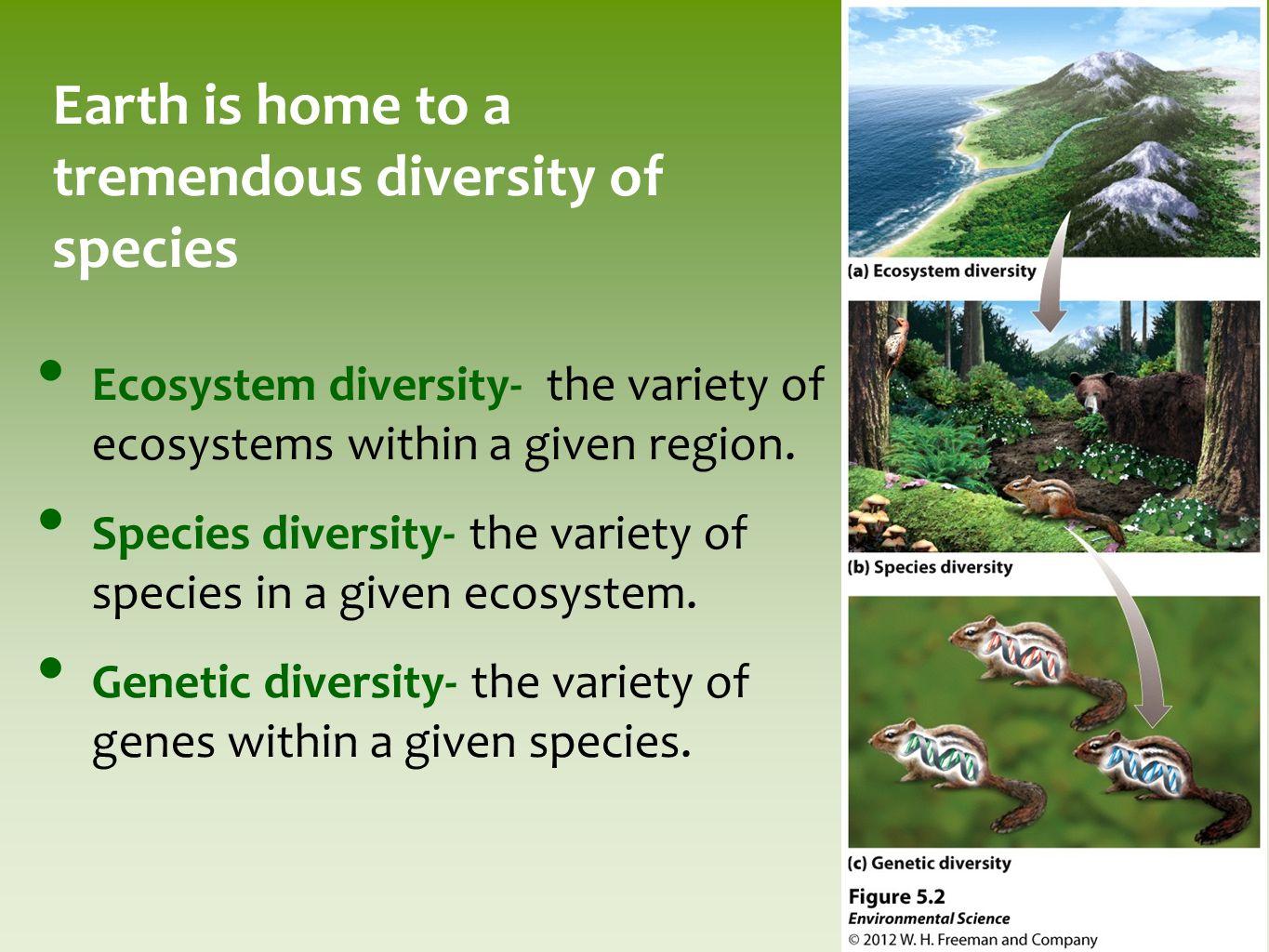
Biodiversity deals with the degree of nature’s variety in the biosphere. This diversity is found at three levels

Genetic Diversity

Ecosystem Diversity

Species Diversity

 Chapter 5 Evolution of Biodiversity. Earth is home to a tremendous ...

Genetic Diversity – is the diversity among individuals of the species. E.g. each human being differs widely from others because of combinations in our genes. This diversity is important for a healthy population. If the number of individuals is reduced, it can lead to extinction of species.


Ecosystem Diversity – Different ecosystems have their own distinctive interlinked species that vary functionally and structurally from other ecosystems. Natural ecosystems are forests, deserts and aquatic systems such as ponds, rivers, etc. If they are misused or overused their productivity gradually decreased and they are said to be degraded.


Species Diversity – The number of species of plants and animals found in a region constitute its species diversity. This diversity is found in natural systems as well as agricultural systems. Natural tropical forests have much greater species diversity than most other regions.

Genetic, ecosystem and species diversity are important for the welfare of human society


Biodiversity must be preserved:

Biodiversity is essential for the stability of ecosystem. A large variety of plant and animal life must be maintained in the ecosystem because each of them has a specific role to play

Our environment is interdependent, and all life depends on uninterrupted functioning of natural systems that ensure supply of energy and nutrients.

All species have an inherent right to live. The well being of future generations is a social responsibility of the present generation.

The ecological limits within which we must work provide direction and guidance for human activities to sustain environmental stability and diversity.


NITROGEN CYCLE


Very few organisms can use nitrogen found in the atmosphere directly. Most plants absorb nitrogen only in the form of nitrates NO2. Atmospheric nitrogen is fixed (converted) by various bacteria. Plants absorb nitrogen compounds either directly from nitrogen fixing bacterial or indirectly from inorganic compounds that the bacteria excrete into the soil or water.

When an organism dies, the nitrogen that it contains in organic molecules is converted back into inorganic forms by different decay organisms.

Nitrogen is returned to the atmosphere as a gas by denitrifying bacteria that break up organic molecules for their own food, releasing any nitrogen they contain.


Nitrogen cycle vector illustration in 2020 | Nitrogen cycle ...

CARBON CYCLE

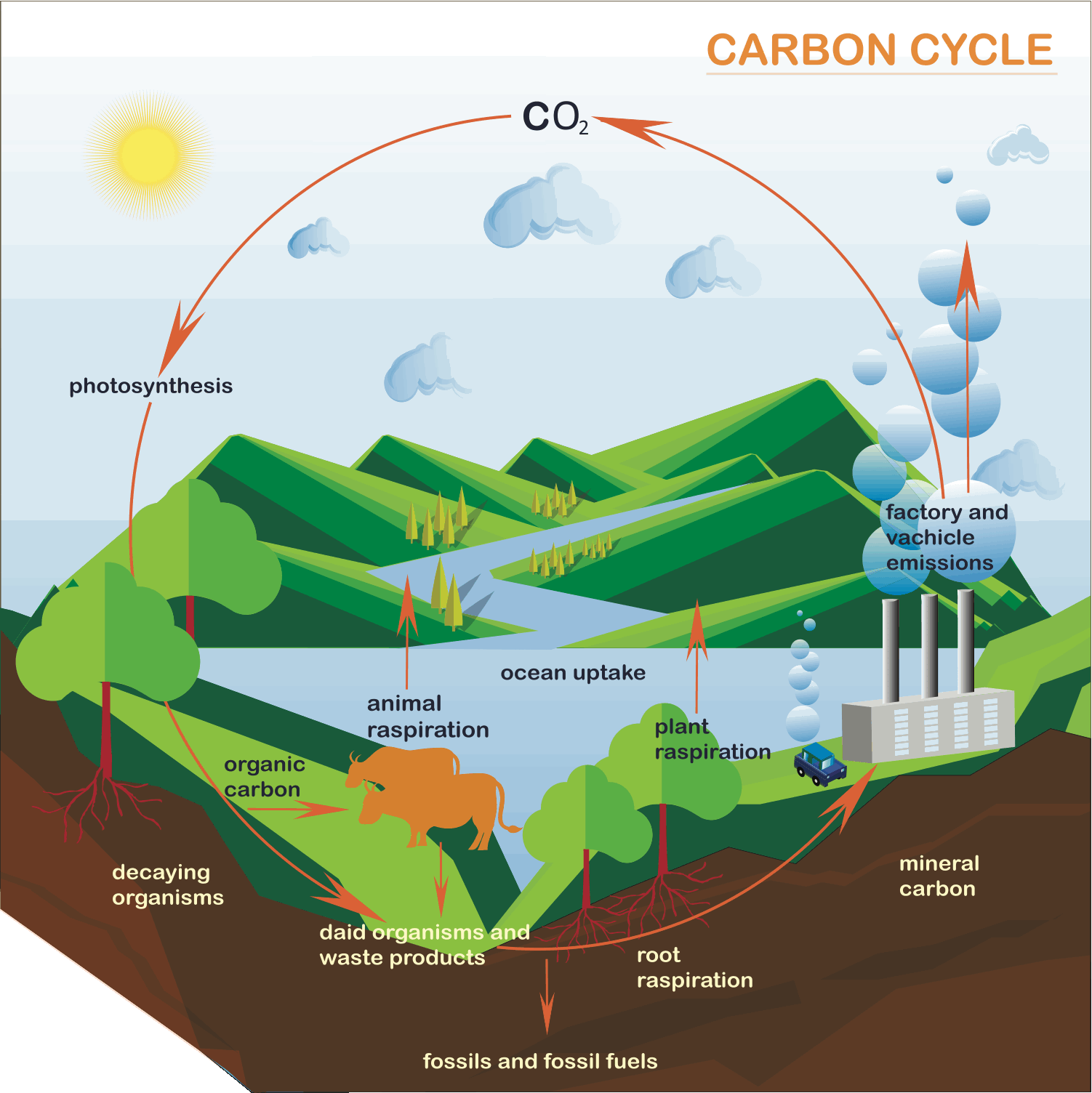
Carbon cycle involves movement of a chemical ‘carbon’ from the environment into living organisms and then back to environment.

The atmospheric CO2 enters the plants during photosynthesis – the process by which plants prepare their own food in the presence of sunlight. Carbon of the carbon dioxide gas is stored in the plant body while oxygen is released back into the air.

The animals eat plants and hence carbon enters bodies of animals. The carbon in animals is released back into the atmosphere as carbon dioxide during respiration.

Sometimes plants are buried under the soil layers due to the crustal movements and hence they get converted into coal due to heat and pressure. When coal is extracted from the mine and burned in factories, carbon in the coal combines with atmospheric oxygen and is released back to the atmosphere as carbon dioxide gas.

Human Impact on the Carbon Cycle

Carbon is one of the most important gases in our atmosphere. Earth needs carbon either for structure, energy or as in the case of humans, for both.

Human activities such as burning of fossil fuels and deforestation are responsible for the rapid increase in carbon dioxide concentration leading to rise in atmospheric temperatures.

Higher concentrations of carbon dioxide and other green house gases leads to increased trapping of infrared radiation. This results in warming up of temperatures at lower levels, change in weather patterns and climate.

Increased concentration of CO2 has an important impact on plant growth – some plants respond more favorably to increase in CO2 than others.


Processes and pathways of the carbon cycle | A Level Geography

HYDROLOGICAL / WATER CYCLE

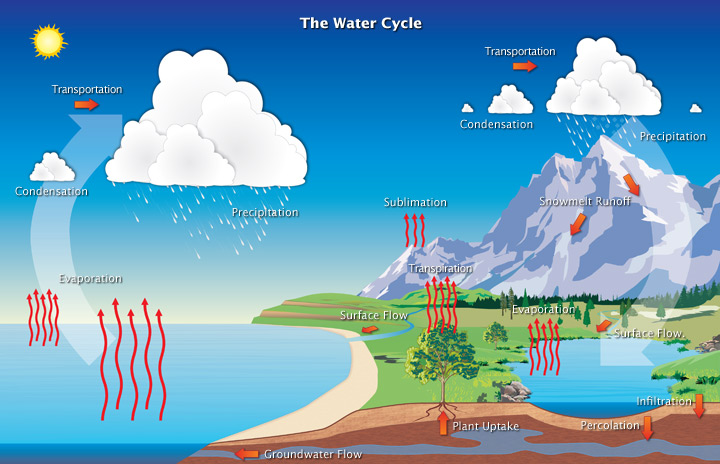
 Water cycle is circulation of water in environment. Water from land or sea surface evaporates due to solar energy. Water vapor rises into the atmosphere, cools and after a particular level is converted to water, snow, etc. (condensation). A part of the water that falls on the land is evaporated back to the atmosphere. Some water seeps into the soil to form ground water and the remaining flows over the land in the form of streams and rivers from where it evaporates again.

Human Impact and Hydrological Cycle

The total amount of water on the earth’s surface remains constant. Human actions bring about serious alterations in the natural hydrological cycle. The demand for water has grown with the increase in population not only for domestic use, but also for agricultural, industrial and economic growth.

Water use has also resulted in larger discharge of waste water from domestic, industrial, agricultural and other sources. These discharges are mixed with various types of pollutants, hazardous chemicals and bacteria. This results in reduction in availability of drinking water.

Large urban centers lead to increase in surface runoff through drains and sewer systems thus increasing events of urban flooding.

To provide water dams were constructed. The dams change the flow of water and affect the amount of fresh water flow to the sea.

Agricultural activities have seriously hampered natural hydrological cycle. Clearing of forests for agriculture leads to increase in soil erosion. Use of fertilizers, insecticides, pollutes the natural system.

Extraction of ground water for irrigation or drinking may lead to depletion or sinking of land damaging property. Human activities have polluted ground water e.g. industrial chemical sewage and other pollutants.

Activities like mining also lead to alterations in the natural water cycles by pumping out large proportion for dewatering the mines and washing of minerals. Both these activities release water hat has high levels of mineral content thus polluting streams.

Oil slicks develop due to spills of oil from tankers and containers used for transport and storage. Oil impairs the exchange of gases and destroys natural systems. This results in death of marine animals.

Changes in the natural water or hydrological cycle can also result in contributing towards global warming, disruption in climatic systems, erratic and sudden occurrences of floods, cyclones, etc.

The water cycle (article) | Ecology | Khan Academy


BIOGEOCHEMICAL CYCLES

Biogeochemical cycles play the very important role of redistribution of material and energy from one place to another.

The important biogeochemical cycles are:

Hydrological cycle (Water cycle) Click on the link to find the details https://sstuffsimplified.blogspot.com/2020/08/hydrological-water-cycle.html

Carbon cycle - Click on the link to find the details https://sstuffsimplified.blogspot.com/2020/08/carbon-cycle.html

Nitrogen cycle - Click on the link to find the details https://sstuffsimplified.blogspot.com/2020/08/nitrogen-cycle.html

Tuesday, 26 May 2020

RELEVANCE OF ENVIRONMENTAL STUDIES IN COMMERCE


Environment is defined as the sum total of all external conditions and influences which affect life on earth.

Human beings depend on the environment for food, water, clothing, shelter, raw materials, metals, minerals, etc.

Science and technological inventions have made human life more comfortable. With the growing population and its innumerable needs, there is pressure and stress on the available resources.

The disturbance in the environmental stability gradually lead to decline in the quality of environment
E.g. temperatures are rising, rainfall is decreasing, loss of biodiversity, increase in air, water, soil and noise pollution, etc.

A commerce student must be familiar with the environmental impact of commercial activities like agriculture, industries, mining, transport because these activities are responsible for depleting the good quality of environment.

The student must learn to view ‘development’ in correct perspective. He/she must inspect and review man-environment interaction in a way that he can identify ‘right’ and ‘wrong’ actions.

An understanding of the effects of human actions on environment is necessary to generate a consciousness to protect our environment and maintain good quality life

The study enables students to understand growth pattern, composition and direction of trade at the local, regional, national and international level.

Introduction of Environmental studies to the commerce faculty is the right step towards generation environmental awareness in young minds.


FOOD CHAIN

All ecosystems are made up of food chains that begin with energy i.e. sunlight extracted from the physical environment and converted to organic matter by plants.

Herbivores (plant eating animals) synthesize a portion of the plant material in their bodies. the flesh of the herbivores provides nutrition and energy to carnivores (flesh eating animals). Thus, energy is passed on from one organism to another step by step thus establishing a link. These links together form a food chain.

Food chains

Monday, 18 May 2020

HIPPO EFFECT - AN OVERVIEW


 Evolutionary biologist E. O. Wilson has coined the acronym HIPPO to describe the multiple assaults on biodiversity.

H – Habitat destruction
I – Invasive species 
P – Pollution
P – Population increase
O – Overharvesting

Virtually every ecosystem on the planet is degraded and some are in a state of near collapse. Species abundance is declining across large categories of animals and plants.

FISHERIES
Fisheries populations are prone to sudden drops once the level of exploitation reaches a certain tipping point.
e.g. North Atlantic cod fishery in the early 1990’s

CORALS
Coral reefs are under multiple assaults and pervasive threats because of rising sea surface temperatures. There is also physical destruction of reefs because of tourism, fishing, boating and other hazards like ocean pollution and large scale harvesting of corals for ornamental purposes.

AMPHIBIANS
The world is currently suffering from a crash of amphibian populations including many species of frogs and toads. Habitat destruction, fragmentation of wetlands and forests, invasive species like fish that eat tadpoles, use of pesticides and herbicides, destructive fungi, exposure to ultraviolet rays etc.

POLLINATORS
Many fruits, vegetables and flowering trees depend on pollinators such as honey bees for reproduction. There is now a vast decline in the wild populations of many pollinators by unsuitable invasive species. This results in declining crop productive and rising food costs.

GREAT APES
There is an acute threat to the great ape populations, including gorillas, bonobos, and  chimpanzees. Many of the dangers revolve around growing encroachment of human population on the forest habitats of the great apes.

In order to protect biodiversity the United Nations Convention on Bilogical Diversity (CBD) treaty was signed in 1992. Accordingly the objectives of the treaty are described as “the conservation of biological diversity, the sustainable use of its components and the fair and equitable sharing of the benefits arising out of the utilization of genetic resources”

The treaty calls on countries to take appropriate actions to conserve biological diversity.

The following wide range of conservation actions were envisaged:
-          reduce the rate of biodiversity loss – habitats and ecosystems, species and populations, genetic diversity
-          promote sustainable use of biodiversity
-          address the major threats to biodiversity, including those arising from invasive alien species, climate change, pollution and habitat change.
-          Maintain ecosystem integrity and the provision of goods and services provided by biodiversity in ecosystems in support of human well being
-          Protect traditional knowledge, innovations and practices
-          Ensure the fair and equitable sharing of benefits arising out of use of genetic resources
-          Mobilize financial and technical resources for Implementing the convention and the strategic plan, especially for developing countries, in particular the least developed countries and small island developing states among them, and countries with economies in transition.

SILENT SPRING – RACHEL CARSON


Rachel Carson single handedly launched the American and global environmental movements.

The story of Silent Spring reveals:
How a courageous woman took on the chemical industry and raised important questions about humankind’s impact on nature.

Silent Spring was named the most influential book in the last fifty years.

Rachel Carson's book Silent Spring challenged the widely accepted notion that man was destined to control nature. Though experts accused Carson of being hysterical, challenged her credibility as a scientist, and launched a negative propaganda campaign against the book. Silent Spring remained on the bestseller list for almost a year, and the world began to take notice.

DDT, the most powerful pesticide in the world had ever known, was capable of killing hundreds of different kinds of insects at once.

A spray as indiscriminate as DDT can upset the economy of nature as much as a revolution upsets social economy. The large bird kills which had occurred on Cape Cod was the result of DDT sprayings.

Silent spring described how DDT entered the food chain and accumulated in the fatty tissues of animals, including human beings, and caused cancer and genetic damage. It remained toxic in the environment even after it was diluted by rainwater.

Carson concluded that DDT and other pesticides had irrevocably harmed birds and animals and had contaminated the entire world food supply.

As a result of the book and its reception, the Environment Protection Agency was established in 1970. DDT and PCB’s have been almost completely outlawed in the US. Most at risk from those pesticides, such as eagles and peregrine falcons, are no longer facing extinction.

DDT and PCB’s while not used in the US are still routinely produced here and sold to other countries. In the US they have been replaced by narrow spectrum pesticides of even higher toxicity. Pesticide use on farms alone has doubled (to 1.1 billion tons a year) and USA has increased pesticide production by 400%.

Rachel Carson remarked: ‘Man’s attitude toward nature is today critically important simply because we have now acquired a fateful power to alter and destroy nature. But man is a part of nature, and his war against nature is inevitable a war against himself…(We are) challenged as mankind has never been challenged before to prove our maturity and our mastery, not of nature, but of ourselves’.

SIGNIFICANCE/ IMPACT OF THE SILENT SPRING

·   Exposed corporate and government indifference to the issue of pesticide poisoning.
·       Led to banning DDT and PCBs in America.
·   Environmental Protection Agency was established in 1970 and Pesticide Regulation and Food Safety Inspection was moved to its auspices
·  Endangered species like eagles and peregrine falcons no more face extinction.
·  Signaled the beginning of the American and global environmental movement.
·       New way of thinking about earth-to see ourselves as connected to the earth

Thursday, 27 February 2020

THE ENVIRONMENT IS A FUNCTIONING LIVE SYSTEM

Environment is the sum of total conditions and surroundings of man in which he inhabits, interacts and influences and is influenced. It is a comprehensive term.

No organism can live in isolation. It depends on its natural environment.

The environment which comprises of a network of living and non living components, constantly interact and are in a state of balance. Any change in one of the components or processes triggers off a chain of reactions over a period of time and space.

e.g. Increase in the use of fossil fuels has led to high emission of Carbon Monoxide and Lead Oxide which leads to depletion of the ozone layer which controls UV radiation. This in turn causes skin cancer.

It is thus important to understand the need for natural systems and their inter dependence on each other. Only then will we be able to respect the environment which looks after all our needs.

Thus the environment is a functioning live system.

Wednesday, 24 February 2016

CSR AND E-WASTE MANAGEMENT / MEDICAL WASTE MANAGEMENT


E-WASTE (ELECTRONIC WASTE) / WEEE (WASTE ELECTRICAL AND ELECTRONIC EQUIPMENT) / E-SCRAP

Electronic waste or e-waste describes all used and discarded electrical or electronic devices. Some of the components of electronic equipments (e-waste)are considered toxic and non-biodegradable.

E-waste includes secondary computers, entertainment devices, mobile phones, office electronic equipment, television sets, refrigerators, etc.

If treated properly e-waste can be a valuable source of secondary raw materials. However, if not treated properly, it becomes a major source of toxins and carcinogens.

The problem of e-waste is a fast growing one around the globe on account of rapid technological change, low initial costs as well as the growing problem of consumerism. The growth in the electronic industry has led to economic as well as social impacts. With high rates of production and exports, increase in consumption rates there is higher generation of electronic waste.

As countries like India have lower environmental standards, electronic waste is being sent here for processing – in most cases illegally. Delhi and Bangalore have electronic waste processing areas. The uncontrolled disassembling / burning and disposal cause both environmental as well as health problems.

The need of the hour is to have proper e-waste management. One of the best ways is to encourage recycling. Television sets, mobile phones, audio visual equipment contain valuable elements and substances that can be recycled. For e.g. Circuit boards contain precious metals such as gold, silver, platinum, etc and base metals such as copper, iron, aluminum, etc. which can be extracted and reused.

The proper disposing of or reusing of electronics and e-waste can help prevent health problems, reduce greenhouse gas emissions and create jobs with reuse thus offering a more environment friendly and socially conscious alternative.

MEDICAL WASTE MANAGEMENT

Medical waste management is a major concern and responsibility of health care organisations. Disposal mechanisms for medical waste must be stringent and foolproof to prevent the risk of infection, toxicity and contamination. Ethical and religious norms are also to be respected.

Tuesday, 27 January 2015

GREEN HOUSE EFFECT


Gases in the Earth’s atmosphere, including water vapor, allow heat energy from the sun to pass through to the land and oceans. Heat energy radiating from the earth’s surface is absorbed by these gases (known as Green House gases) and is radiated back to earth instead of escaping into space. Thus this causes rise in earth’s temperature causing global warming.


Green House gases are Carbon Dioxide, Chlorofluro carbons (CFC), methane, nitrous oxide, ozone and water vapor.