Showing posts with label EVM. FYBMS. Show all posts

Saturday, 15 August 2020

BIODIVERSITY

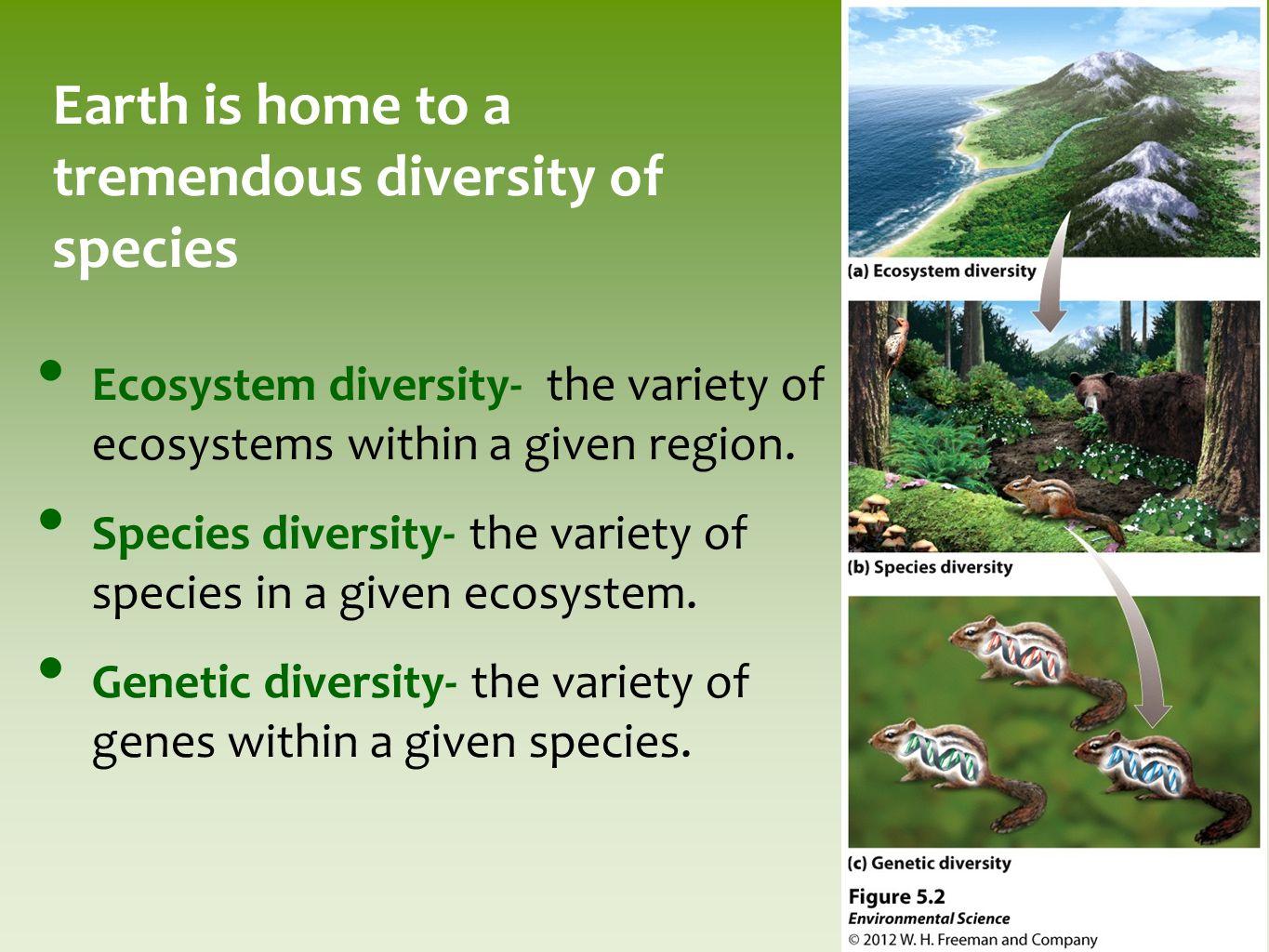
Biodiversity deals with the degree of nature’s variety in the biosphere. This diversity is found at three levels

Genetic Diversity

Ecosystem Diversity

Species Diversity
 Chapter 5 Evolution of Biodiversity. Earth is home to a tremendous ...

Genetic Diversity – is the diversity among individuals of the species. E.g. each human being differs widely from others because of combinations in our genes. This diversity is important for a healthy population. If the number of individuals is reduced, it can lead to extinction of species.


Ecosystem Diversity – Different ecosystems have their own distinctive interlinked species that vary functionally and structurally from other ecosystems. Natural ecosystems are forests, deserts and aquatic systems such as ponds, rivers, etc. If they are misused or overused their productivity gradually decreased and they are said to be degraded.


Species Diversity – The number of species of plants and animals found in a region constitute its species diversity. This diversity is found in natural systems as well as agricultural systems. Natural tropical forests have much greater species diversity than most other regions.

Genetic, ecosystem and species diversity are important for the welfare of human society


Biodiversity must be preserved:

Biodiversity is essential for the stability of ecosystem. A large variety of plant and animal life must be maintained in the ecosystem because each of them has a specific role to play

Our environment is interdependent, and all life depends on uninterrupted functioning of natural systems that ensure supply of energy and nutrients.

All species have an inherent right to live. The well being of future generations is a social responsibility of the present generation.

The ecological limits within which we must work provide direction and guidance for human activities to sustain environmental stability and diversity.


NITROGEN CYCLE


Very few organisms can use nitrogen found in the atmosphere directly. Most plants absorb nitrogen only in the form of nitrates NO2. Atmospheric nitrogen is fixed (converted) by various bacteria. Plants absorb nitrogen compounds either directly from nitrogen fixing bacterial or indirectly from inorganic compounds that the bacteria excrete into the soil or water.

When an organism dies, the nitrogen that it contains in organic molecules is converted back into inorganic forms by different decay organisms.

Nitrogen is returned to the atmosphere as a gas by denitrifying bacteria that break up organic molecules for their own food, releasing any nitrogen they contain.


Nitrogen cycle vector illustration in 2020 | Nitrogen cycle ...

CARBON CYCLE

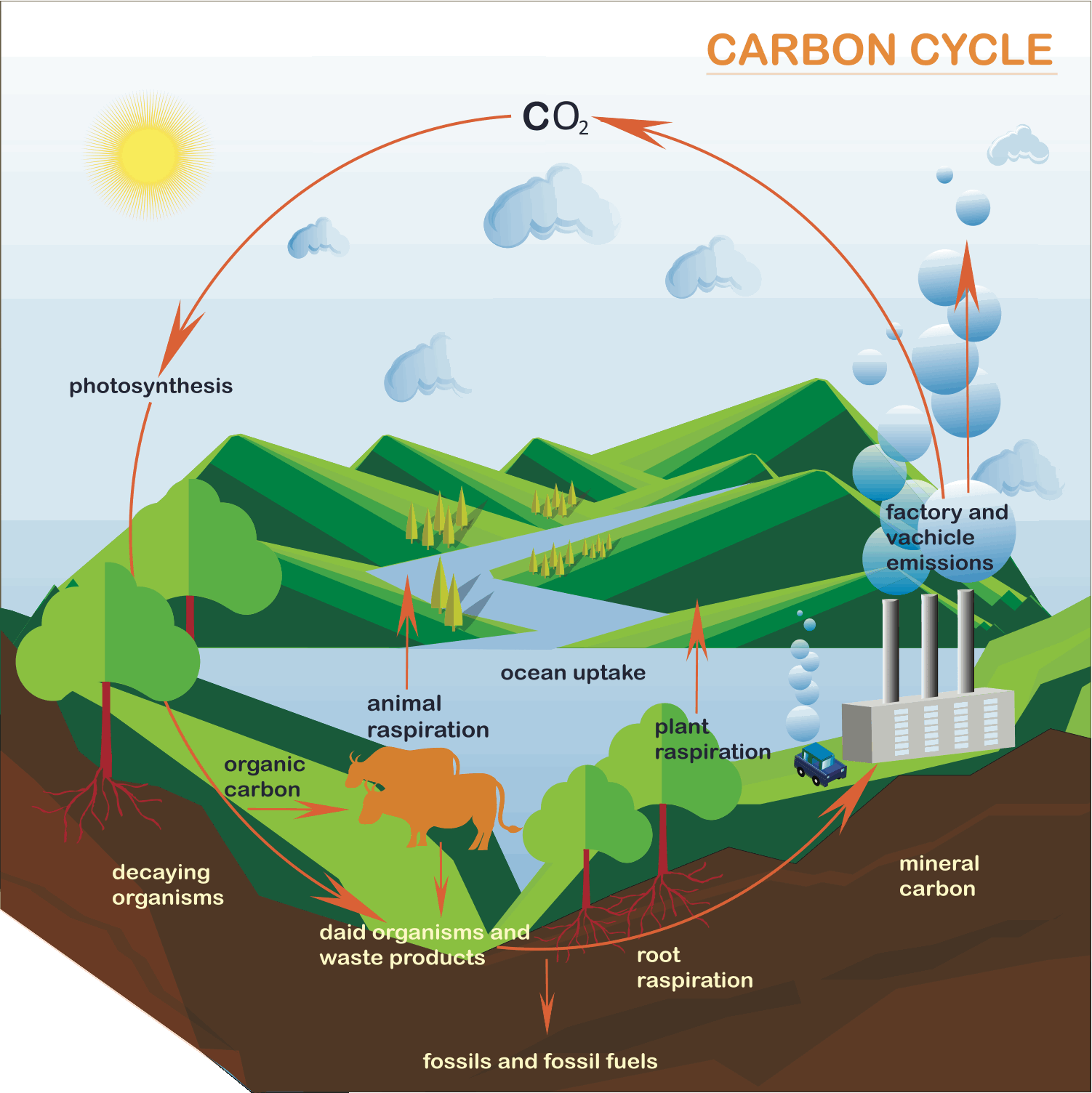
Carbon cycle involves movement of a chemical ‘carbon’ from the environment into living organisms and then back to environment.

The atmospheric CO2 enters the plants during photosynthesis – the process by which plants prepare their own food in the presence of sunlight. Carbon of the carbon dioxide gas is stored in the plant body while oxygen is released back into the air.

The animals eat plants and hence carbon enters bodies of animals. The carbon in animals is released back into the atmosphere as carbon dioxide during respiration.

Sometimes plants are buried under the soil layers due to the crustal movements and hence they get converted into coal due to heat and pressure. When coal is extracted from the mine and burned in factories, carbon in the coal combines with atmospheric oxygen and is released back to the atmosphere as carbon dioxide gas.

Human Impact on the Carbon Cycle

Carbon is one of the most important gases in our atmosphere. Earth needs carbon either for structure, energy or as in the case of humans, for both.

Human activities such as burning of fossil fuels and deforestation are responsible for the rapid increase in carbon dioxide concentration leading to rise in atmospheric temperatures.

Higher concentrations of carbon dioxide and other green house gases leads to increased trapping of infrared radiation. This results in warming up of temperatures at lower levels, change in weather patterns and climate.

Increased concentration of CO2 has an important impact on plant growth – some plants respond more favorably to increase in CO2 than others.


Processes and pathways of the carbon cycle | A Level Geography

Thursday, 3 March 2016

RESOURCES

NATURAL RESOURCES are of two kinds:

RENEWABLE RESOURCES: are those which are inexhaustive and can be regenerated within a given span of time. For e.g. Forests, wild life, wind energy, hydropower, solar energy etc.

NON-RENEWABLE RESOURCES: are resources which cannot be regenerated. For e.g. Fossil fuels like coal petroleum, minerals, etc. Once these reserves are exhausted they cannot be replenished.

Resources can also be classified

1.      On the basis of utility
a.       Renewable Resources
b.      Non Renewable Resources

2.       On the basis of Origin
a.       Biotic Resources – Obtained from the biosphere (Organic Resources) e.g. Forest products
b.      Abiotic Resources – Non living matter (Inorganic Resources) e.g. Land, Water Etc.

A resource can be useful only when it can be converted or utilized to generate wealth which could be of economical or ecological importance. The process of converting resources to wealth is very critical and must be handled with caution by the government and other decision making organizations as the amount of economy generated by converting the resources to wealth should not harm the environment or the damage should be minimal and reversible.

Development leads to pollution and thus sustainability is threatened. Exploitation of natural resources in a sustainable manner involves:

Sustainability: To avoid depletion of resources we must only harvest their production surplus.

Biodiversity: In order to maintain global biodiversity all species must be protected against extinction or decimation.

Integration: all species belong to an ecosystem and are integrated into a complex web of interaction and should therefore be managed as a unit.

It is important to keep in mind the following:

-          Ecological regeneration of resources is the basis of long term resource availability and higher productivity.

-          Future socio-economic development depends on the proper conservation of resources and finding alternative eco-friendly energy resources.

-          Unexplored land including no man’s land should not be neglected and must be treated as resource reservoirs.

Identification of resources, its management and utilization and further conversion of resource to wealth leads to a successful economic and ecological balance.